Rio 2016 Olympic Games. Sponsors versus vegetables

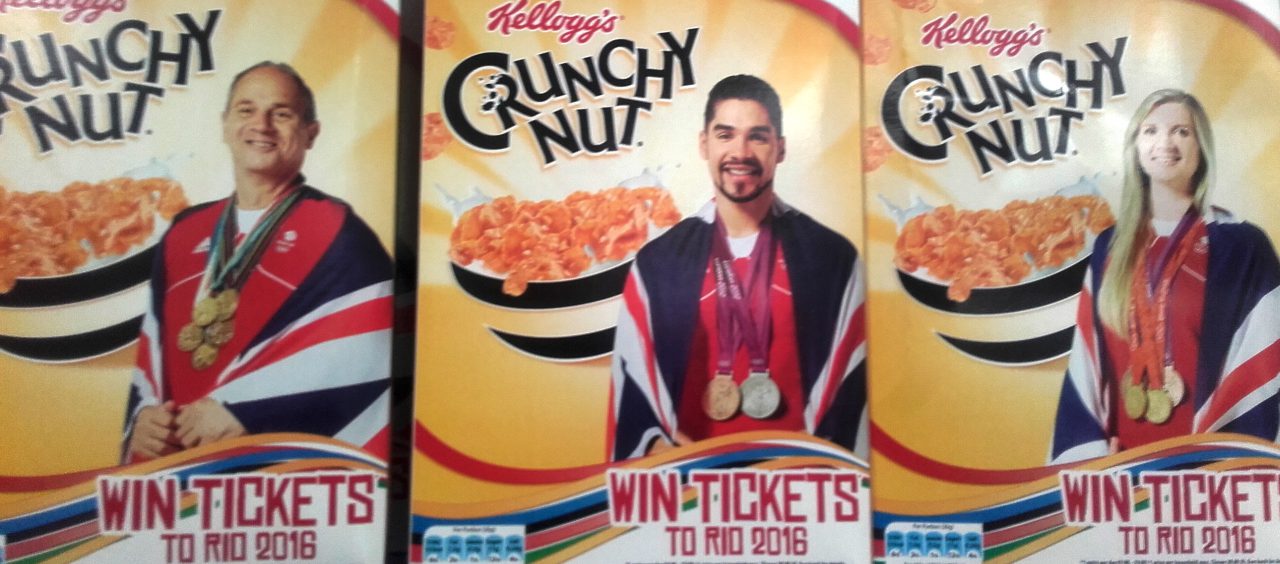
I’m conducting some research on Olympic sponsors. Early days but here is a brief comparison of products that apparently sponsor Olympic Games / teams …. and those that do not. Here are the sponsors  …

20160522_153947
Courtesy of me

And here is a near random selection of foods that for some reason are not sponsors:

Vibrant Produce
Courtesy of betteveg.co.uk

Food for tho … #nopuns

For more, see

Piggin, J., Tlili, H. & Louzada, B. (2017) How does health policy affect practice at a sport mega event? A study of policy, food and drink at Euro 2016. International Journal of Sport Policy and Politics. 9, 739-751 

http://www.tandfonline.com/doi/abs/10.1080/19406940.2017.1372793

How do older people feature in the new UK Government sport policy?

Here is a link to a recent blog I wrote on the representation of older adults in PA and sport policy: https://ageingpa.tumblr.com/post/146888871903/how-do-older-people-feature-in-the-new-uk


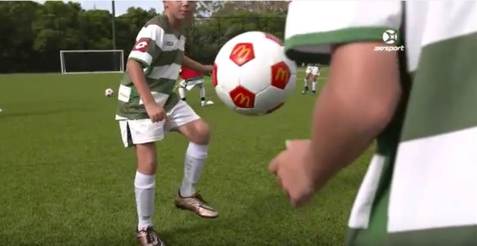
McDonald’s branding of NZ youth football

This promotional video advertises the involvement of McDonald’s in New Zealand Youth football. It must be difficult to manage a football club, and so any help would be appealing, but there are serious health and ethical issues with this commercial relationship. (I’ve discussed this before in the UK setting.)

Both the imagery and the “script” from the video convey a wonderful charitable act by McDonald’s. Some extracts from the video include …

McDonald’s spokesman: “Bibs and cones and a football is all you need and that’s really the resources the club wanted and so that’s where we put a lot of our effort.”

Football coach: “Without that support it would be a lot more difficult … trickier to coach the kids and help them develop.”

Young football player: “The gear that McDonald’s supplies is awesome because if you didn’t have it you couldn’t play so it’s great”

Young players (in unison): “It’s a beautiful game … I’m loving it!”

My questions which flow from this sponsorship deal …

Q. 1: Does this relationship conflict with the World Health Organisation’s recommendation (2016) to “Require settings such as schools, child-care settings, children’s sports facilities and events to create healthy food environments”? The World Health Organisation is very concerned about this:

“Nutrition and food literacy and knowledge will be undermined if there are conflicting messages in the settings where children gather. Schools, child-care and sports facilities should support efforts to improve children’s nutrition by making the healthy choice the easy choice and not providing or selling unhealthy foods and beverages” (WHO, 2016).

“Settings where children and adolescents gather (such as schools and sports facilities or events) and the screen-based offerings they watch or participate in, should be free of marketing of unhealthy foods and sugar-sweetened beverages. The Commission notes with concern the failure of Member States to give significant attention to Resolution WHA 63.14 endorsed by the World Health Assembly in 20103 and requests that they address this issue. Parents and caregivers are increasingly the target of marketing for foods and beverages high in fats and sugar, aimed at their children …” (WHO, 2016).

Q. 2: Why was it necessary to brand the footballs and the sportswear?

Picture1
Q. 3: Both the coach and the player suggest it would be difficult or impossible without the help of McDonald’s. How accurate are these claims?

Joe Piggin

This Green and Sedent Land: A New Sport Policy for England

Having lived in the UK for a few years now, I have witnessed a near constant cascade of physical activity policies. In 2014, the UK Government wrote “Move More Living More”, a short document aimed at salvaging something of the Olympic participation legacy. Later that year, Public Health England’s “Everybody Active Everyday” was published, which tried to take an “evidence based approach” and inspire radical change in “this green and sedent land” (to butcher Blake’s famous line).

More recently, in late 2015, the DCMS published “Sporting Future: A New Strategy for an Active Nation”. This contained a clear directive to merge sport with health and economic outcomes. And now we are presented with Sport England’s “Towards an Active Nation”. One might think with such an array of organisations and such a compendium of policy statements, the country would be on its way to health, wellbeing and fitness. Of course, I sincerely hope that change occurs. And it looks like the most recent policy offers some significant concrete solutions.

The images

To judge a policy by its cover and imagery, the most striking thing about the Towards an Active Nation is that it doesn’t look anything like a traditional “sport” strategy. The images include

– a couple of girls running in a forest

– a group of young people paddling on a misty lake

– a woman in a field with a rounders bat

– a couple of older adults playing badminton

– a young woman playing wheelchair basketball

– a coach with a young athlete at an athletics track

– a group of older women in an informal running group

– a group of young boys at an indoor climbing wall

– a group of young students being coached in football

– a young girl playing social tennis

boats

There is very little imagery of competitive traditional sports. A traditionalist might ask Where is the cricket!? The rugby!? The Olympic athletes!? The role models!? The images make us imagine a nation with all manner of outdoor landscapes, with diverse participants enjoying non-adversarial, non-competitive activities. The pictures subtly move the reader away from the traditional English sports and towards a Scandinavian model of “sport”, a perceived utopia where traditional sport is just one aspect of an active life.

So how does this new policy aim to get there?

Well, there will be a massive restructure of funding. Pie charts on pages 16 and 17 are revealing. Two charts are presented, one of the previous funding allocation, and the projected investment. Confirming some of the pre-release rumours, it looks like NGBs will be sweating even more than they usually are, with their funding becoming even more contested.

stats

The Words 

The core “outcomes” (or values) emphasised in the document are physical / mental wellbeing, individual, social, community and / or economic development. The policy appears unequivocal in how it will decide on funding. It can be boiled down to this quote:

“whether an organisation receives public funding should be based on what it can contribute to the outcomes …. not on its nature or structure. Put simply, it’s what you can do that counts, not who you are.” (p. 12, bold in original)

And so what changes might we expect in the sport sector? Well, key word searches are revealing. “Change” is mentioned 31 times, “New” – 72 times and “Funding” – 33 times. So the new change to the funding is based around organisations’ potential to achieve the “outcomes”. This will mean that organisations around the country will be auditing themselves to reflect on what they offer and how their offering could be attached to the outcomes.

Picking on one in particular, I suspect “economic development” has not been high on the list for most sport organisations, nor has it been emphasised in previous strategies. “Customer” is mentioned 32 times. And so I think business orientations and commercial incentives might become more important very soon. Sport England states:

WE WILL … Provide insight, advice and funding to those who deliver to regular players, focusing on customer needs and delivering excellent experiences.” (p. 27)

Maybe I have not kept up with the fluidity of language, but I can’t help but think of “customers” as a term which is a bit too business-like, a bit too corporate. A search of the old Sport England’s “Creating a Sporting Habit for Life” reveals zero instances of the word “customer”. So not only are sport organisations being reframed, so are people. What might the effects of this be I wonder? Time will tell!

Lastly, I see that the policy is guided by “behaviour change theory”. In a nutshell, this assumes people do not have a sporting habit for life. And so something which had been the catch-cry of Sport England for 5 years, will need to be unlearnt. Pragmatically, I wonder how difficult it is for people in an organisation to change the basic assumptions of their work. As Sport England note, this will require some change for the organisation as well. I wish them good luck!

Removing tackling from rugby in school PE?

The recent debate over tackling in school sport has been lively (and sometimes a little extreme).
I was one of the co-signatories of a letter calling for UK Commissioners, Ministers and educators to do more prevent injuries in children playing school rugby. One of the main proposals is to remove tackling from school PE rugby. [Note – I think future debates need a clearer distinction between voluntary school sport and compulsory PE sport]. I also think there is an opportunity to simply “deselect” rugby, rather than ban it. Schools deselect all types of sports for reasons of safety, cost, and lack of access, lack of qualified experts. This might temper some of the extreme reactions to a proposed “ban”.

It was great to see that the letter has generated significant media attention. Unless society questions accepted practices from time to time, we are all in trouble. And after hearing from people who want to keep the status quo, they do have a persuasive argument: “sport is good, and all sport has risk.”

But my sentiments lie specifically with school children who are obliged to partake in a sport that has an elevated risk compared to other school sports (I will say more on this later).  As such I am concerned about the school environment and the specific obligations of physical education teachers to protect children.

Many secondary schools in the United Kingdom deliver contact rugby as a compulsory part of the physical education curriculum from age eleven. It is incredible that in 2016, any school in this country would require children to play as part of physical education. Children and parents must be allowed to object because of safety concerns. 

Does rugby build character while it harms bodies?

Rugby players, coaches and fans imbue rugby with various life-changing qualities. One rugby coach on the news recently asked “how will children learn to tackle if they don’t learn when they are young?” My response would be that it is surely possible to live a fulfilled, happy life without tackling. There is nothing essential about tackle rugby.

I also heard a young rugby coach say the sport would be “neutered” without tackling, while a reporter asked if banning tackling was “nanny state”. Many people defend rugby by saying that it builds character. But then so do hundreds of other social activities which do not involve frequent head collisions. So, we should beware of emotive arguments that detract from the evidence. And the evidence is very concerning:

  • The risks of injuries for those aged under 18 years are high and injuries are often serious.
  • The majority of all injuries occur during contact or collision, such as the tackle and the scrum. These injuries which include fractures, ligamentous tears, dislocated shoulders, spinal injuries and head injuries can have short-term, life-long, and life-ending consequences for children.
  • Head injury and concussion is a common injury and repeat concussion is more likely when a player has a history of a previous concussion. A link has been found between repeat concussions and cognitive impairment and an association with depression, memory loss and diminished verbal abilities, as well as longer term problems.
  • Children take longer to recover to normal levels on measures of memory, reaction speed and post-concussive symptoms than adults.

As a policy researcher, we need to consider these negative effects and weigh them against reasons to play tackle rugby in PE at school. These include skill development, fitness, and teamwork. However, given that any number of other sports offer similar outcomes with less risk, and with more opportunity to engage different genders (which is something else which doesn’t occur as much as it could in UK PE), it is time to make some changes.

If a change is made to school PE rugby, some people think it is a slippery slope. A common question with any policy change is “What about other sports?” “What about football?” Well, consider that the United States Soccer Federation now has a policy banning under 11’s from heading the ball, and is reducing headers in training for 11 to 13 year olds. By aiming to reduce concussions, the USSF is acknowledging that brain health of children is more important than being able to hit a ball with their head.

And speaking of other sports, we know that the NFL (American Football) is interested in having a franchise in the UK. What might this expansionist vision mean for the UK. Well, the NFL is already trying to hook young British children on the sport. One NFL player who was in London for a game last year commented:

To see how far the NFL has spread and these kids respond, it’s awesome … I look forward to these opportunities and look forward to teaching these kids something I know. Hopefully, they catch on and like the game” (www.jaguars.com). Players, teams and governing bodies have a vested interest in as many people as possible playing and watching the sport. I accept that professional athletes battering each other in violent sports can be exciting (especially when New Zealand win). But we need to think “at what cost?” Do these sports destroy bodies as much as they build character? There are more and more stories emerging of retired elite players whose lives are blighted by long term injuries. As well as the scientific evidence, we should also listen to these stories more.

In conclusion, we do not need to be neuro-scientists to understand that our brains are precious, sensitive organs. Brains have not evolved to repeatedly receive violent impacts. Let’s make school PE a place where children might learn great things, not a place where they are at an increased risk of injury.

Incidentally, right now there is a review on health and safety in sport in the UK. https://www.gov.uk/government/news/safety-and-welfare-in-sport-to-undergo-an-independent-review

Ethics in sport, exercise and physical activity scholarship

Ethical principles are clearly very important in sport, exercise and PA research and practice. Here are some possible ways of addressing a variety of difficult ethical issues:

REFLECTION: Academics should be committed to considering their ethical positions with regard to the funding they receive.

DECLARATIONS: Academics should be committed to making explicit their ethical positions with regard to the funding they receive.

DISCLOSURE OF FINANCIAL GAIN: Academics should be committed to disclosing fees received from private funders for their research, even in cases where this is not a requirement to do so through contractual arrangements.

HUMAN RIGHTS: Academics should be extremely wary of engaging with funders from states / governments and NGO’s which are criticised by human rights organisations. If academics do become involved with such organisations, they should articulate their reasons for their involvement explicitly.

DUE DILIGENCE: Academics should critically investigate the background of the commercial partners they engage with.

IMPLICATIONS: Academics should reflect on the possible use of research data, particularly when it might be used in the manipulation of an organisation’s public image.

Academics should reflect on the motives of research funders and the wider implications of potential involvement with corporate partners, who promote goods, services and ideas to vulnerable populations.

SCEPTICISM: As producers of knowledge, sport and PA academics are in a powerful, privileged position. They should automatically treat funders with scepticism.

EDUCATION: Academics involved in sport, exercise and physical activity curriculums should give attention to “ethics” in their courses. They should emphasise ethics throughout the qualification and find suitably qualified people to teach this.

PROMOTION: Through their involvement with academic journals, professional organisations and conferences academics should promote discussion themes of “ethics”, “conflicts of interests” and “vested interests”. Academic journals, professional organisations and conferences should promote these discussions too.

Note: I appreciate the helpful contribution of my peers in forming these proposals.

Sadly, the emerging brain science of Chronic Traumatic Encephalopathy

Despite the immense joys and economic benefits that many sports bring, emerging science about the human brain will require significant attention by many sports organisations. In particular, it seems there is a need to become more acutely aware of Chronic Traumatic Encephalopathy, and incorporate this into organisational policies and practices. Here are some recent links:

On the politics of brain disease: http://www.nytimes.com/2016/03/16/sports/nfl-concussions-cte-football-jeff-miller.html?_r=0

Mothers complaining to Congress: http://edition.cnn.com/2016/03/16/health/angry-moms-call-for-federal-rules-on-contact-sports/

In the above article, Dr Robert Cantu, from Boston University’s School of Medicine explains that “between the ages of 10 and 12 is a key time for neural circuits to be established for emotion, “our impulse control, our emotions, anxiety, depression”. If the brain is injured at that age, it can potentially impact that circuitry. 

A story about Jarrod Cooper, former NFL player. He explains in vivid detail what it is like to have ongoing brain injury: http://www.mercurynews.com/raiders/ci_29656550/former-raider-struggles-keep-his-mind-right

Interviews with Dr Robert Cantu (neurosurgeon) and Dr Ann McKee (who the NFL deferred to). They discuss if young children should be playing American Football: https://www.youtube.com/watch?v=sR2WqfpSZYo

Dr Bennet Omalu explains the discovery and implications of CTE (“The motive to do good knows no boundaries”): https://www.youtube.com/watch?v=pOKvhcBelwQ

An interesting quote around the 33 minute mark: “What causes CTE? … Repeated blows to the head.”

Dr Bennet Omalu considers American football: http://www.nytimes.com/2015/12/07/opinion/dont-let-kids-play-football.html

Retired player Ray Lewis discussing the difficulties of rule changes: https://www.youtube.com/watch?v=KbtkcQ5umPA

2016: Interesting policy from Ivy League Universities: http://www.nytimes.com/2016/03/02/sports/ncaafootball/ivy-league-moves-to-eliminate-tackling-at-practices.html?_r=

2016: Hot off the press: Are There Subconcussive Neuropsychological Effects in Youth Sports? An Exploratory Study of High- and Low-Contact Sports. http://www.ncbi.nlm.nih.gov/m/pubmed/26979930/

A 2016 news article highlighting the plight of one of the favourite players from my childhood: http://www.huffingtonpost.com/entry/nfl-concussion-crisis-doubters-should-read-these-two-sentences_us_571e853ee4b0f309baee455a

Another 2016 news article highlighting the plight of another one of my favourite players from my childhood: http://www.sportingnews.com/nfl-news/4699133-darryl-talley-wife-shares-sad-story-former-nfl-player-mental-health-physical-decline-cte-buffalo-bills

A 2015 British Journal of Sports Medicine research article claiming a high incidence of severe incidence of severe injury, including concussion, in the sport of rugby union: http://bjsm.bmj.com/content/early/2015/12/23/bjsports-2015-095491.full

A 2016 NZ Herald investigation about brain diseases affecting retired rugby players and their families: http://www.nzherald.co.nz/the-longest-goodbye-rugby-and-the-dementia-dilemma/news/headlines.cfm?c_id=1504010

A 2016 study which shows ongoing effects of mild traumatic brain injury for nearly half of people studied http://m.nzherald.co.nz/sport/news/article.cfm?c_id=4&objectid=11616808

I enjoyed playing rugby and American football growing up. It will be interesting to see how various sports and schools incorporate this emerging scientific knowledge into their policies and practices.

pads
My gridiron pads.


McDonald’s sponsorship of UK football

The Football Associations of the United Kingdom need to change their relationship with McDonald’s.

One strand of the McDonald’s sponsorship agreement with the UK’s Football Associations appears to be “Dress the kids in McDonald’s clothing whenever possible.”

mc1
Children wearing McDonald’s uniforms. Also, title image. Source: http://www.mcdonalds.co.uk

We are all familiar with the corporate logic of “get them when they’re young” in order to build brand loyalty. But the McDonald’s strategy of adorning young football players in McDonald’s branded clothing is surely an unacceptable practice.

mc2
A football celebrity with children in McDonald’s uniforms. Source: http://www.mcdonalds.co.uk

McDonald’s calls itself a “community partner” in this extravaganza – anything to distance itself from the idea that there is a profit motive behind this apparently benevolent act.

Rapp and Jespersen (2015) would argue this practice is entangled marketing: “For companies to achieve long-term relationships with customers, they must go far beyond setting engagement as the goal. … Once entangled, a pair of particles remain inextricably connected. They never let go of one another, no matter their distance apart.” McDonald’s accomplish this by giving hundreds of thousands of young people “their first kit”. Occasionally they have celebrity role models tell groups of young players what a special day it is when they receive their first kit. For example, see this video which celebrates 250,000 McDonald’s kits being distributed to children around the UK. “McDonald’s ambassadors” hand over “brand new kit” to children in the video.

mc3
Football celebrity distributing McDonald’s branded football kits. youtube.com/user/HeresToWhatMatters

One football administrator enthusiastically recounted that “McDonald’s have provided football kit now … to over 10,000 teams in the last 2 years in Wales.”

mc4
Football celebrity distributing McDonald’s branded football kits. youtube.com/user/HeresToWhatMatters

But these shirts are not “donations” at all. They are explicitly and specifically branded with the McDonald’s arches. The children become miniature Trojan horses, and their target is the other players around them. The difference is that the “invaders” are displayed loud and clear. The McDonald’s brand is there for all the other children to see throughout their football sessions. The brand exposure, while not measured on the McDonald’s web page, must be enormous. By allowing (and perhaps requiring!) these football shirts to be worn the Football Associations are subtly condoning and promoting McDonald’s as a normal and positive element of the sports arena.

Through the McDonald’s FA Charter Standard kit scheme, young children are exposed to McDonald’s branding. Clubs that live up to the FA’s safeguarding policy are rewarded with free kits which expose children to the McDonald’s. Moreover, with the FA’s blessing, McDonald’s is bestowed legitimacy and authority on safeguarding children and harm minimisation. The irony is troubling.  When a company (such as McDonald’s) is banned from advertising their products to children on tv, this should be sufficient evidence to consider them as unfit to sponsor a supposedly health-enhancing sport. 

Policy Issues

The UK government’s current approach to legislation on youth sport sponsorship is clearly very lax. The Government’s current “Sporting Future” policy is full of praise for “voluntary agreements”:

“Sponsorship is an area where a number of sports, and individual clubs, have adopted a responsible approach, for example around sponsorship by companies marketing alcohol or high fat sugar and salt (HFSS) foods. We will continue to discuss with sports the scope for voluntary agreements in this area. The government’s Childhood Obesity Strategy, due to be published in early 2016, is also likely to contain measures relating to HFSS foods.”

While there is a UK law banning junk food advertising targeted at children, the loophole whereby sports organisations can receive funding from HFSS companies to promote their organisations to children should be closed. If it is not legislated against, or if national governing bodies do not end these practices themselves, they will be increasingly implicated in the poor health of the nation.

Jill McDonald, the McDonald’s chief executive wrote that “Ten years ago, we took the decision to invest the majority of our UK sponsorship funds into football and crucially into the grassroots of the game.” She also wrote that she is “immensely proud of what our partnerships with each of the Football Associations has achieved”, However, I am concerned about what is not measured and displayed on the website. These questions should surely form any future evaluation of McDonald’s partnerships with youth sport.

1. Exactly why did McDonald’s choose to brand the shirts they “donated”?
2. How many cumulative minutes have children been exposed to McDonald’s branding at training sessions?
3. How were ideas about health and nutrition dealt with at these sessions?

mc6
McDonald’s brand football kits. youtube.com/user/HeresToWhatMatters

The UK Government will soon publish its new Obesity Policy. I suspect the government will not legislate against food companies invading childhood sport spaces with their branding. However, with the disastrous effects of childhood obesity, either McDonald’s or the various Football Associations need to end this insidious practice. These branded shirts are advertising. It is time to remove them from circulation.

Joe Piggin